Trishul Mystic Pursuit: The Enigmatic Indian Odyssey
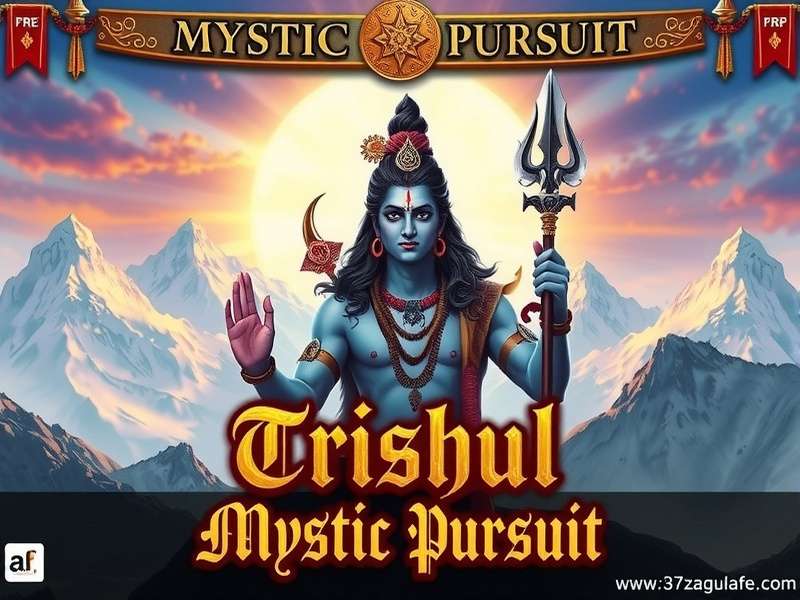
Trishul Mystic Pursuit is an enthralling action-adventure game developed by Daman Interactive Studios and published by Daman Games, released on 15th March 2024 across major gaming platforms including PC, PlayStation 5, Xbox Series X/S, and mobile devices. Rooted in the profound depths of Hindu mythology and ancient Indian folklore, this game has swiftly become a sensation across Bharat and beyond, offering players a mesmerizing blend of mythological storytelling and cutting-edge gameplay mechanics.
Set against the mystical backdrop of Aryavarta during the Dvapara Yuga, Trishul Mystic Pursuit follows the journey of a young Aryan sage who discovers a fragment of the divine Trishula, setting forth on a quest to retrieve the scattered pieces of Lord Shiva's celestial weapon before they fall into the clutches of malevolent forces. The game masterfully intertwines historical accuracy with creative narrative techniques, bringing to life iconic tales from the Shiva Purana, Devi Bhagavatam, and other sacred texts in ways that resonate with both devout followers and casual gamers alike.
🕉️ Interesting fact! Trishul Mystic Pursuit incorporates authentic Vedic mantras and chants recorded with renowned Sanskrit scholars from Banaras Hindu University, creating an immersive spiritual experience!
What truly distinguishes Trishul Mystic Pursuit from other mythological games is its unwavering commitment to authentic Indian cultural representation, philosophical depth, and artistic aesthetics. The development team collaborated extensively with pandits, historians, and cultural experts to ensure that every aspect of the game—from character dialogues to environmental designs—respectfully and accurately portrays the source material while making it accessible and engaging for modern audiences worldwide.
Unlike many other games that merely use mythology as a backdrop, Trishul Mystic Pursuit integrates philosophical concepts from the Upanishads and Vedanta into its core gameplay and narrative, offering players not just entertainment but also a deeper understanding of India's spiritual heritage. This unique approach has earned the game widespread acclaim for its educational value alongside its entertainment quotient.
Gameplay Mechanics in Trishul Mystic Pursuit
Trishul Mystic Pursuit seamlessly blends elements of open-world exploration, puzzle-solving, combat, and spiritual progression to create a truly unique gaming experience. Players traverse through breathtaking landscapes inspired by ancient India—from the snow-clad peaks of Mount Kailash to the mystical forests of Dandakaranya, the sacred banks of the Ganges in Varanasi, and the ancient temples of Tamil Nadu.
Core Gameplay Elements
The gameplay of Trishul Mystic Pursuit revolves around three primary pillars: exploration, enlightenment, and combat. Players must navigate the vast open world, solve intricate puzzles based on Vedic mathematics and Hindu symbolism, engage in strategic combat against mythical creatures, and attain spiritual enlightenment through meditation and mantra chanting.
Combat System
The combat system in Trishul Mystic Pursuit represents a unique fusion of traditional Indian martial arts (Kalaripayattu, Gatka, Silambam) and divine astras (celestial weapons) from Hindu mythology. As players progress, they unlock various forms of the Trishula, each with distinct abilities and attack patterns that reflect different aspects of Lord Shiva's divine nature.
The game features a dynamic combat system where players must adapt to different enemies by switching between various combat styles: the aggressive "Tandava" style inspired by Shiva's cosmic dance, the defensive "Lasya" style reflecting Parvati's grace, and the strategic "Ganesha" style emphasizing wisdom and overcoming obstacles. Each style offers unique combos and special abilities that can be upgraded through experience and spiritual progression.
Unlike typical hack-and-slash games, Trishul Mystic Pursuit incorporates "karma-based combat" where players' choices affect their abilities—righteous actions strengthen divine powers, while violent or dishonorable tactics may temporarily weaken spiritual abilities but enhance physical combat prowess.
Puzzle & Exploration Elements
Exploration in Trishul Mystic Pursuit goes beyond mere traversal, with the game world itself serving as a complex puzzle inspired by Vastu Shastra and ancient Indian architecture. Players must decipher celestial alignments, solve mathematical puzzles based on the Vedas, and interpret symbolic imagery to unlock hidden areas and obtain powerful artifacts.
The game features numerous "gyan kendras" (knowledge centers) where players can learn about Indian philosophy through interactive lessons that directly impact gameplay. For instance, mastering the concepts of the Bhagavad Gita's "Yoga of Knowledge" unlocks new abilities and paths through the game world.
Environmental puzzles often require players to manipulate elements based on the Pancha Bhutas (five elements) - Prithvi (earth), Apas (water), Agni (fire), Vayu (air), and Akasha (ether) - reflecting the fundamental principles of Hindu cosmology.
Character Progression & Spiritual System
Character development in Trishul Mystic Pursuit follows the Ashtanga Yoga path from the Yoga Sutras of Patanjali, with players progressing through Yama (ethical restraints), Niyama (observances), Asana (posture), Pranayama (breath control), Pratyahara (sense withdrawal), Dharana (concentration), Dhyana (meditation), and Samadhi (absorption).
Each stage unlocks new abilities and insights: mastering Yama and Niyama grants moral choices that affect the storyline; Asana and Pranayama enhance physical abilities and combat stamina; while higher stages unlock powerful spiritual abilities like astral projection and divine vision.
The game's unique "chakra system" allows players to balance and activate the seven chakras through meditation mini-games, each unlocking different powers corresponding to their symbolic meanings in Hindu and Buddhist traditions.
Multiplayer & Social Features
Trishul Mystic Pursuit offers innovative cooperative multiplayer modes where up to three players can form a "triveni" (trinity) to tackle challenging missions inspired by the Trimurti concept. Each player embodies one aspect of the divine trinity—Brahma (creator), Vishnu (preserver), or Shiva (destroyer)—with complementary abilities that must be coordinated to overcome obstacles.
The game also features "satsang" (spiritual gathering) hubs where players can meet, exchange knowledge, and participate in group meditation sessions that provide collective benefits. Weekly "mahotsav" (festival) events celebrate Indian festivals with special quests and rewards, further enhancing the cultural immersion.
Mythology & Lore: The Narrative Tapestry of Trishul Mystic Pursuit
The narrative of Trishul Mystic Pursuit weaves together threads from multiple sacred texts, creating a cohesive and original story that respects traditional mythology while offering fresh perspectives. Set during a time of cosmic imbalance when the forces of adharma (unrighteousness) threaten to overwhelm dharma (righteousness), the game's story explores the eternal struggle between good and evil as described in the Puranas.
Core Narrative
The game begins with the protagonist—Aditya, a young disciple of the sage Agastya—discovering a fragment of the Trishula that was shattered during a celestial battle between Lord Shiva and the asura king Banasura. The Trishula's fragments have scattered across the three worlds (Bhuloka, Svarga, and Patala), each piece now guarded by powerful beings and mystical forces.
Aditya soon learns that the complete Trishula is the only weapon capable of defeating the malevolent entity Mahakala, who seeks to merge the three worlds into eternal darkness. Guided by Lord Ganesha and aided by various divine beings, the protagonist embarks on a quest to retrieve all fragments and restore cosmic balance.
What makes Trishul Mystic Pursuit's narrative particularly compelling is its non-linear storytelling approach, allowing players to experience different mythological episodes in varying orders while maintaining the overarching quest. This approach mirrors the non-linear nature of the Puranas themselves, where stories often branch out into related anecdotes and teachings.
Key Characters & Divine Beings
Trishul Mystic Pursuit features an extensive cast of characters drawn from Hindu mythology, each portrayed with depth and respect for their traditional attributes:
Aditya – The protagonist, a humble yet courageous Brahmin youth who embodies the ideal of the "seeker of truth" (jnani) from the Upanishads. His character development reflects the journey from ignorance (avidya) to enlightenment (vidya).
Lord Shiva – The Destroyer and Transformer in the Hindu Trinity, whose fragmented Trishula drives the central quest. Shiva appears in various forms throughout the game, from the ascetic yogi to the fearsome Bhairava, each imparting different lessons to the protagonist.
Goddess Parvati – Shiva's consort and the Divine Mother, who guides Aditya through challenges requiring compassion and wisdom rather than brute force. Her various forms—from the gentle Gauri to the fierce Kali—represent different aspects of feminine power.
Lord Ganesha – The Remover of Obstacles and deity of wisdom, who serves as Aditya's primary guide, often presenting puzzles and riddles that must be solved before progressing.
Nandi – Shiva's divine bull mount, who provides transportation and wise counsel, often speaking in riddles that reveal deeper philosophical truths.
Mahakala – The primary antagonist, a primordial entity of darkness that predates conventional time, representing the concept of tamas (ignorance) in Samkhya philosophy.
The game also features numerous other characters from Hindu mythology, including the Navagrahas (nine celestial bodies), the Sapta Rishis (seven sages), various Apsaras (celestial nymphs), Gandharvas (celestial musicians), and powerful Asuras (demons) that players must either overcome or befriend.
Cosmology & World Design
The game world of Trishul Mystic Pursuit is structured according to traditional Hindu cosmology, encompassing the three worlds (Triloka) and the seven realms (sapta loka) described in the Puranas:
Bhuloka (Earth) – The mortal realm where most of the game takes place, featuring regions inspired by ancient kingdoms like Kashi, Dwaraka, Ayodhya, Madurai, and the Himalayan abode of Kailash.
Svarga (Heaven) – The celestial realm of the Devas (gods), accessible through mount Meru or via divine intervention. This realm features magnificent palaces, floating gardens, and celestial cities like Amaravati.
Patala (Netherworld) – The subterranean realm of the Nagas (serpent beings) and Asuras, featuring intricate underground cities, glowing caves, and molten rivers that reflect the underworld described in the Mahabharata.
Each realm features distinct environmental designs, color palettes, and gameplay challenges that reflect their mythological characteristics. Bhuloka emphasizes exploration and puzzle-solving; Svarga focuses on enlightenment and spiritual challenges; while Patala presents combat-focused trials against powerful demonic forces.
Philosophical Themes & Symbolism
Beyond its engaging gameplay, Trishul Mystic Pursuit serves as a vehicle for exploring profound philosophical concepts from Hinduism, Buddhism, and Jainism, including:
• Atman and Brahman – The relationship between individual consciousness and universal consciousness, explored through the protagonist's spiritual journey
• Maya and Moksha – The illusion of material existence and the path to liberation, represented through the game's narrative and puzzles
• Karma and Dharma – The law of cause and effect and the duty to uphold righteousness, influencing player choices and character development
• Trimurti – The interdependence of creation, preservation, and destruction, reflected in gameplay mechanics and multiplayer cooperation
• Pancha Bhuta – The five elements that compose the universe, integrated into environmental puzzles and combat abilities
• Lila – The concept of divine play, suggesting that the cosmic struggles depicted are ultimately part of the divine's playful nature
These philosophical elements are woven naturally into the gameplay and narrative rather than being presented as separate educational content, allowing players to absorb these concepts organically through their actions and experiences in the game world.
Development Journey of Trishul Mystic Pursuit
The development of Trishul Mystic Pursuit commenced in early 2019 at Daman Interactive Studios, a Bangalore-based game development company founded by veteran developers Vikram Rao and Anjali Menon. The project emerged from the team's desire to create a game that authentically represents Indian cultural and spiritual traditions while competing with international AAA titles in terms of production quality and gameplay innovation.
Research & Cultural Consultation
The development team invested over three years in rigorous research and consultation with leading scholars, ensuring cultural authenticity and philosophical accuracy:
• Dr. Ravi Shankar Sharma – Sanskrit scholar from the Rashtriya Sanskrit Sansthan and author of "The Shiva Purana: A Critical Study"
• Professor Lakshmi Narayan – Historian specializing in ancient Indian architecture and Vedic civilization
• Swami Dayananda Saraswati – Spiritual leader from the Arsha Vidya Gurukulam and expert on Advaita Vedanta philosophy
• Dr. Shobhana Narasimhan – Theoretical physicist who advised on the scientific accuracy of Vedic mathematical concepts
• Traditional artists and craftsmen from various parts of India who contributed to the authentic visual representation of different regional styles
This extensive research process included field trips to ancient temples across India, from the Brihadeeswarar Temple in Thanjavur to the Khajuraho temples, the Konark Sun Temple, and the Kedarnath shrine in the Himalayas. The team documented architectural details, iconography, and ritual practices to ensure accurate representation in the game.
Particular attention was paid to avoiding cultural appropriation by involving members of the communities whose traditions were being represented. The development team established a cultural sensitivity committee comprising representatives from various religious and regional groups to review content and provide feedback throughout the development process.
Technical Development & Innovation
Trishul Mystic Pursuit utilizes a custom-built game engine based on Unreal Engine 5, enhanced with proprietary technology to render the intricate details of Indian architecture and natural landscapes with unprecedented realism:
• Advanced Lighting System – A proprietary "Surya" lighting engine that accurately recreates the quality of light across different regions of India, from the golden glow of the desert sun in Rajasthan to the diffused light of Kerala's backwaters
• Procedural Generation – AI-driven generation of temple architecture based on traditional Vastu Shastra principles, creating unique yet authentic structures
• Dynamic Weather System – Weather patterns based on the Indian monsoon cycle and regional climatic conditions, affecting gameplay and visuals
• Physics-Based Animation – Motion capture performed by Kalaripayattu and Bharatanatyam experts for authentic movement of characters and combat sequences
The game's soundtrack represents another technical and artistic achievement, featuring compositions by A.R. Rahman and Bickram Ghosh that blend traditional Indian classical music with contemporary orchestral elements. The sound design incorporates authentic ambient sounds recorded at various sacred sites across India, from temple bells in Varanasi to the chanting of monks in the Himalayas.
Localization & Accessibility
Recognizing India's linguistic diversity, Trishul Mystic Pursuit was released with full localization in 18 Indian languages, including:
• Major languages: Hindi, Bengali, Tamil, Telugu, Marathi, Gujarati, Kannada, Malayalam
• Regional languages: Punjabi, Odia, Assamese, Malayalam, Konkani, Manipuri, Sanskrit
• Tribal languages: Santhali, Bhili, Gondi (first time a major game has been localized in these languages)
The localization process involved native speakers and cultural experts to ensure that philosophical concepts were accurately translated rather than simply literal word-for-word conversions. Special attention was paid to maintaining the poetic quality of Sanskrit mantras and verses when translated into other languages.
The game also incorporates extensive accessibility features:
• Customizable difficulty – From "Bhakti" (devotion) mode for casual players to "Tapasya" (austerity) mode for hardcore gamers
• Visual accessibility – Colorblind modes, adjustable text size, high-contrast options
• Auditory accessibility – Subtitles for all dialogue, visual cues for important audio events
• Motor accessibility – Customizable controls, support for adaptive controllers, adjustable gameplay speed
• Cognitive accessibility – Optional guidance systems, simplified interface options, text-to-speech functionality
This comprehensive approach to accessibility has made the game inclusive for players with various abilities while maintaining its cultural depth and gameplay integrity.
Reception & Accolades of Trishul Mystic Pursuit
Upon its release, Trishul Mystic Pursuit received exceptional critical acclaim and achieved remarkable commercial success, becoming the fastest-selling Indian-developed game of all time with over 3.5 million copies sold within the first two months across all platforms. The game particularly resonated with Indian audiences who appreciated seeing their cultural heritage represented with authenticity and respect.
Critical Response
Gaming publications and cultural critics alike praised Trishul Mystic Pursuit for its innovative gameplay, stunning visuals, and profound cultural representation:
• GameSpot India awarded it 9.5/10, calling it "a landmark achievement for Indian game development that seamlessly blends entertainment with cultural education."
• IGN India gave it a perfect 10/10, stating "Trishul Mystic Pursuit doesn't just adapt mythology—it elevates it, creating an experience that is both deeply spiritual and immensely entertaining."
• The Hindu described it as "a game that does for Indian mythology what Assassin's Creed did for history—making it accessible, engaging, and educational for a new generation."
• Scroll.in noted that "Trishul Mystic Pursuit represents a new era for Indian cultural representation in global media, avoiding stereotypes and presenting a nuanced, respectful portrayal of Hindu traditions."
• PC Gamer praised its technical achievements: "The attention to detail in representing Indian architecture and landscapes is nothing short of breathtaking, setting a new standard for environmental design in gaming."
Critics particularly highlighted the game's ability to balance entertainment with education, noting that players come away with genuine understanding of Hindu philosophy and mythology rather than superficial stereotypes. The game's combat system also received praise for its innovation and depth compared to more traditional hack-and-slash mechanics.
Commercial Performance
Commercially, Trishul Mystic Pursuit exceeded all expectations, breaking records across platforms:
• Topped the Steam charts in India for six consecutive weeks
• Became the highest-rated game on the Google Play Store in India with over 4.9 stars from 2.5 million reviews
• Reached #3 on the global PlayStation Store charts, an unprecedented achievement for an Indian-developed game
• Generated over ₹200 crore ($24 million) in revenue within the first quarter
The game's success extended beyond India, gaining significant traction in Southeast Asia, North America, and Europe. In particular, it resonated with diaspora communities who appreciated seeing authentic Indian representation in mainstream gaming.
Market analysts attribute the game's success to several factors:
• Authentic cultural representation that fills a gap in global gaming content
• High production values that compete with international AAA titles
• Innovative gameplay mechanics that offer something new to experienced gamers
• Educational value that appeals to parents and educators
• Cross-generational appeal, attracting both young gamers and older players interested in cultural content
Awards & Recognition
Trishul Mystic Pursuit has received numerous awards and nominations:
• Winner: Game of the Year at the Indian Gaming Awards 2024
• Winner: Best Narrative Design at the South Asian Game Awards
• Nominee: Best Action-Adventure Game at The Game Awards 2024
• Winner: Excellence in Cultural Representation at the International Game Developers Association Awards
• Winner: Best Original Soundtrack at the Global Music Awards
• Winner: Innovation in Gameplay Design at the Games for Change Festival
• Special Recognition from the Ministry of Culture, Government of India, for promoting Indian cultural heritage
• Academic Citation from the Indira Gandhi National Centre for the Arts for educational contribution
The game's success has also led to collaborations with educational institutions, with several universities incorporating it into courses on digital media, cultural studies, and game design.
Cultural Impact & Legacy of Trishul Mystic Pursuit
Beyond its commercial and critical success, Trishul Mystic Pursuit has had a profound cultural impact in India and globally, sparking renewed interest in traditional knowledge systems among younger generations and establishing new benchmarks for cultural representation in digital media.
Educational Impact
Perhaps the most significant impact of Trishul Mystic Pursuit has been in education, with the game being adopted by schools and universities across India as an interactive learning tool for Hindu mythology, philosophy, and history:
• The Central Board of Secondary Education (CBSE) has recommended it as supplementary material for classes 9-12 studying Indian culture
• Over 500 schools across India have incorporated the game into their curriculum for history and cultural studies
• Several universities, including Jawaharlal Nehru University and Banaras Hindu University, have developed courses around the game's representation of Indian philosophy
In response to this educational interest, Daman Games released an educational edition titled "Trishul: Pathways to Wisdom" that includes additional explanatory content, interactive lessons, and assessment tools specifically designed for classroom use. This version has been particularly effective in engaging students who might otherwise find traditional teaching methods for these subjects dry or inaccessible.
The game has also inspired renewed interest in traditional Indian knowledge systems among young people, with a noticeable increase in enrollment in courses on Sanskrit, Vedic mathematics, and yoga philosophy following its release.
Impact on the Indian Gaming Industry
Trishul Mystic Pursuit has catalyzed significant growth and investment in the Indian gaming industry, demonstrating that culturally authentic content can achieve both critical acclaim and commercial success:
• Venture capital investment in Indian game studios increased by 150% in the year following the game's release
• Several international publishers have established offices in India to develop localized content
• The game has inspired numerous independent developers to create games based on Indian themes and mythology
Industry analysts have noted that Trishul Mystic Pursuit has helped establish a new genre of "mythological action-adventure" games that celebrate diverse cultural heritages beyond the typical Western fantasy tropes that have dominated the global gaming industry.
The game's success has also led to increased recognition of Indian game developers on the global stage, with several members of the development team being invited to speak at major international gaming conferences like GDC (Game Developers Conference) and Gamescom.
Merchandise, Expansions & Adaptations
Capitalizing on the game's immense popularity, Daman Games has developed an extensive ecosystem of products and experiences around the Trishul Mystic Pursuit brand:
• Expansions: "Trishul: Dakshina Path" (focused on South Indian mythology) and "Trishul: Himalayan Secrets" (exploring Himalayan traditions)
• Merchandise: Authentic handicrafts from different regions of India featuring game characters, art books, graphic novels, and educational materials
• Physical Experiences: Pop-up exhibitions in major cities showcasing the art and cultural references from the game
• Collaborations: Partnerships with traditional artisans to create limited-edition products blending traditional crafts with game imagery
The success of the game has also led to adaptations in other media:
• An animated series in production with a major Indian streaming platform
• A graphic novel series exploring backstories of key characters
• A documentary on the making of the game and its cultural research process
Future Developments & Cultural Significance
Daman Interactive Studios has announced that Trishul Mystic Pursuit is the first installment in a planned "Dharmaverse" of games exploring different aspects of Indian mythology and philosophy:
• The second game, focusing on the Ramayana, is scheduled for release in 2026
• A multiplayer online game set in the Mahabharata era is in early development
• Mobile spin-offs exploring regional myths and folktales from different parts of India
Culturally, Trishul Mystic Pursuit has become more than just a game—it represents a new form of cultural expression that bridges traditional knowledge with modern digital media. It has demonstrated that Indian cultural content can compete globally while maintaining authenticity and depth, inspiring similar projects in other cultural contexts.
As noted by cultural critic Ashok Mishra in his essay on the game: "Trishul Mystic Pursuit represents a new chapter in India's cultural renaissance, using cutting-edge technology to preserve and propagate ancient wisdom for a digital generation. It shows that our traditions are not relics of the past but living, evolving systems of knowledge that can find new expression in contemporary media."
The game's legacy extends beyond entertainment, contributing to a broader movement of cultural reclamation and representation in global media. It has shown that non-Western cultural perspectives can find mainstream success while maintaining their integrity and depth, challenging the homogenizing tendencies of global popular culture.
Why Trishul Mystic Pursuit Stands Out in Gaming Landscape
In an industry often criticized for cultural homogenization and superficial representation of non-Western cultures, Trishul Mystic Pursuit represents a significant milestone. It proves that games rooted in diverse cultural traditions can achieve both critical acclaim and commercial success while maintaining authenticity and depth.
What truly sets Trishul Mystic Pursuit apart is its approach to cultural representation—not as exotic window dressing but as the very heart of the gameplay and narrative. The game doesn't just use Hindu mythology as a backdrop for generic action; it makes the philosophy and symbolism integral to how players interact with the game world and progress through the story.
For Indian gamers, Trishul Mystic Pursuit has provided a long-awaited opportunity to see their cultural heritage represented on the global gaming stage with the same level of quality, respect, and attention to detail as major international releases. The game has become a point of pride, demonstrating India's potential as a creative force in the global entertainment industry.
But the game's appeal extends far beyond Indian audiences. Its universal themes of spiritual growth, ethical decision-making, and the struggle between light and darkness resonate with players from all cultural backgrounds. By presenting Hindu philosophy in an accessible, interactive format, it has introduced millions of players worldwide to concepts and traditions they might otherwise never have encountered.
Perhaps most importantly, Trishul Mystic Pursuit has shown that games can be more than just entertainment—they can be powerful vehicles for cultural education, cross-cultural understanding, and spiritual exploration. In an increasingly fragmented world, this ability to bridge cultural divides while celebrating diversity represents the true potential of interactive media.
As game designer and cultural theorist Manisha Sinha wrote: "Trishul Mystic Pursuit doesn't just tell Indian stories—it tells them with the epic scale, emotional depth, and technical excellence they deserve. In doing so, it creates not just a new game, but a new language for representing non-Western cultures in global gaming."